
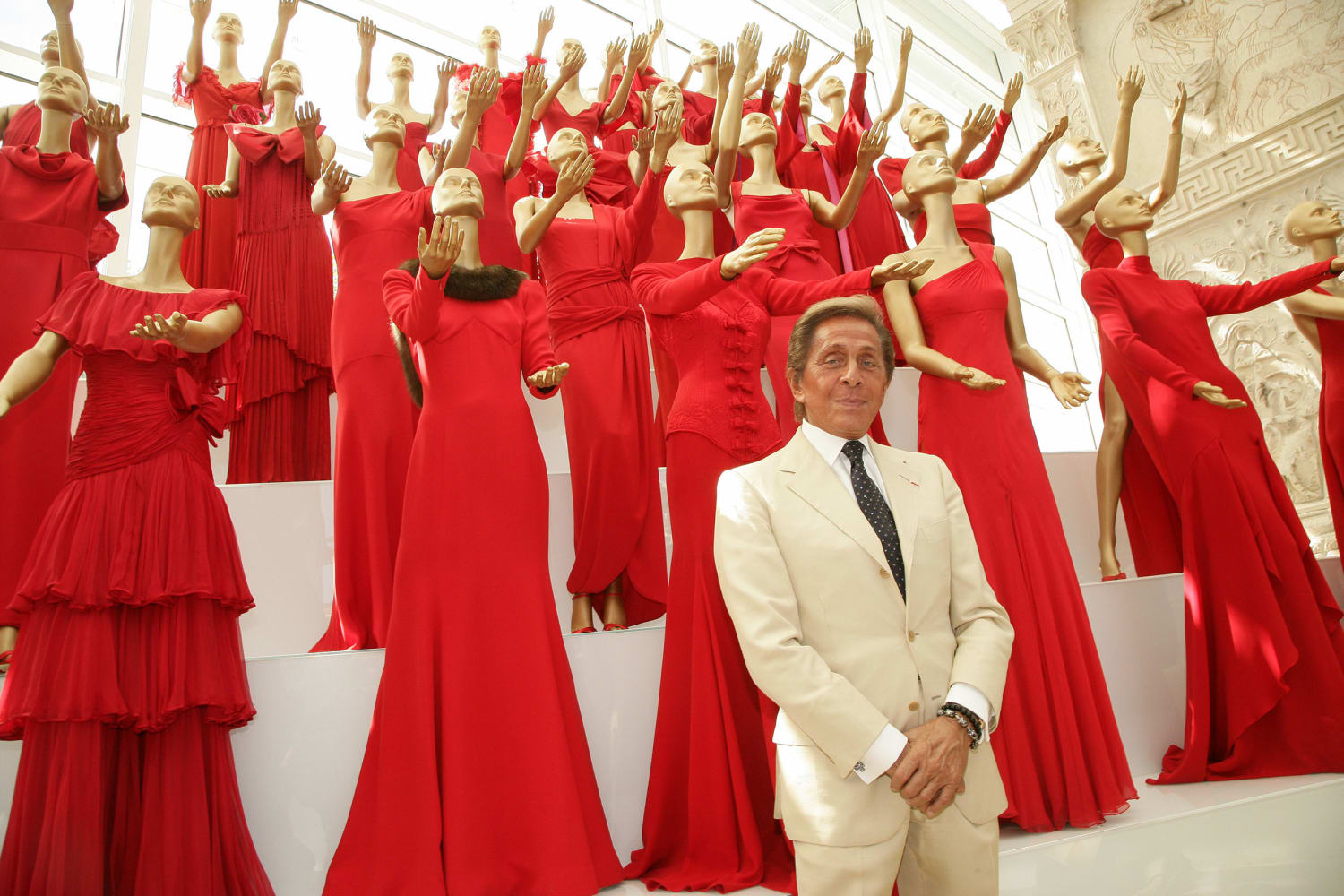
A Timeline of Valentino: From Roman Couture to Global Luxury
Valentino Garavani founded his fashion house in 1960 in Rome, opening his atelier on Via Condotti with business partner Giancarlo Giammetti. The early years established Valentino as a master of couture craftsmanship, heavily influenced by his Parisian training under Balenciaga and Jean Dessès. International recognition arrived in 1962, when Valentino presented a couture collection in Florence that received widespread acclaim and positioned him among Europe’s leading designers. His reputation solidified in 1967, when he introduced the celebrated “no colour” collection—an all-white, ivory, and beige lineup that earned him the Neiman Marcus Award and demonstrated his ability to innovate through restraint and elegance.
The late 1960s and 1970s marked Valentino’s ascent as a designer to the world’s elite. Jacqueline Kennedy Onassis became one of his most influential clients, commissioning Valentino to design her wedding dress in 1968, which brought unprecedented international visibility. Throughout the 1970s and 1980s, Valentino expanded into ready-to-wear while maintaining couture as the heart of the brand, dressing Hollywood stars, European royalty, and society figures. During this period, Valentino red emerged as the house’s defining signature—symbolizing passion, power, and refined glamour.
By the 1990s, Valentino had grown into a fully global luxury brand with boutiques in major fashion capitals and successful lines in accessories, fragrance, and menswear. In 1998, Valentino and Giammetti sold the company, signaling the transition from founder-owned house to corporate luxury brand, though Valentino remained creatively in control. His final couture show in 2008, staged at the Musée Rodin in Paris, was an emotional farewell that celebrated decades of craftsmanship and cemented his status as one of fashion’s last true couturiers.
Following Valentino’s retirement, the house entered a period of creative reinvention. Maria Grazia Chiuri and Pierpaolo Piccioli jointly led the brand from 2008 to 2016, modernizing its femininity while honoring its couture roots. Piccioli then served as sole creative director until 2024, redefining Valentino through inclusivity, bold color experimentation – most notably Pink PP – and contemporary silhouettes that resonated with younger audiences. In 2024, Alessandro Michele was appointed creative director, marking a pivotal moment as the brand prepared to enter a new chapter following the death of its founder in 2026 .
Valentino Garavani vs. Alessandro Michele: Tradition and Transformation
Valentino Garavani’s aesthetic was built on timeless elegance, symmetry, and idealized beauty. His designs emphasized clean lines, impeccable tailoring, luxurious fabrics, and romantic detailing such as bows, lace, and embroidery. He believed fashion should enhance a woman’s grace rather than overpower it, famously stating that women want to be beautiful. His work reflected a classical worldview—rooted in couture tradition, social ritual, and a vision of glamour that transcended trends. Valentino’s designs rarely chased novelty; instead, they cultivated continuity, refinement, and emotional resonance through craftsmanship.
Alessandro Michele, by contrast, approaches fashion as narrative and cultural expression rather than formal perfection. Known for his eclectic, gender-fluid, and historically layered designs at Gucci, Michele brings a more experimental and intellectual sensibility to Valentino. While Garavani’s work celebrated harmony and restraint, Michele’s aesthetic often embraces excess, contradiction, and emotional storytelling. His vision for Valentino is expected to explore archival references through a contemporary lens—blending the house’s romantic codes with surrealism, vintage inspiration, and subversive styling.
The contrast between the two designers reflects a broader shift within the luxury fashion industry. Valentino Garavani represented the era of the couturier-as-artist, where personal vision and craftsmanship defined the brand. Alessandro Michele operates in a digital, fast-moving luxury landscape where cultural relevance, identity, and dialogue with younger consumers are critical. While Michele’s challenge will be preserving the elegance and prestige synonymous with Valentino, his appointment suggests the brand’s intent to evolve rather than remain static, ensuring its relevance in a changing global market .
Why Valentino Mattered
Valentino’s impact on fashion is profound and multifaceted. He set a benchmark for elegance and craftsmanship that transcended fashion trends, influencing both industry peers and generations of designers. The brand he built stands as a testament to the enduring power of beauty, precision, and imaginative artistry in fashion. Even as the industry adapts to new economic realities and technological shifts, Valentino’s legacy – embodied in iconic designs, signature colorways, and a philosophy that celebrates the poetics of clothing – continues to inspire and shape the future of luxury fashion.


