
Luxury fashion is in the middle of a structural shift. The runway still matters. Product still matters. But increasingly, growth is coming from something less tangible: experience.
Consumers are no longer interacting with brands solely through transactions. They are spending time with them.
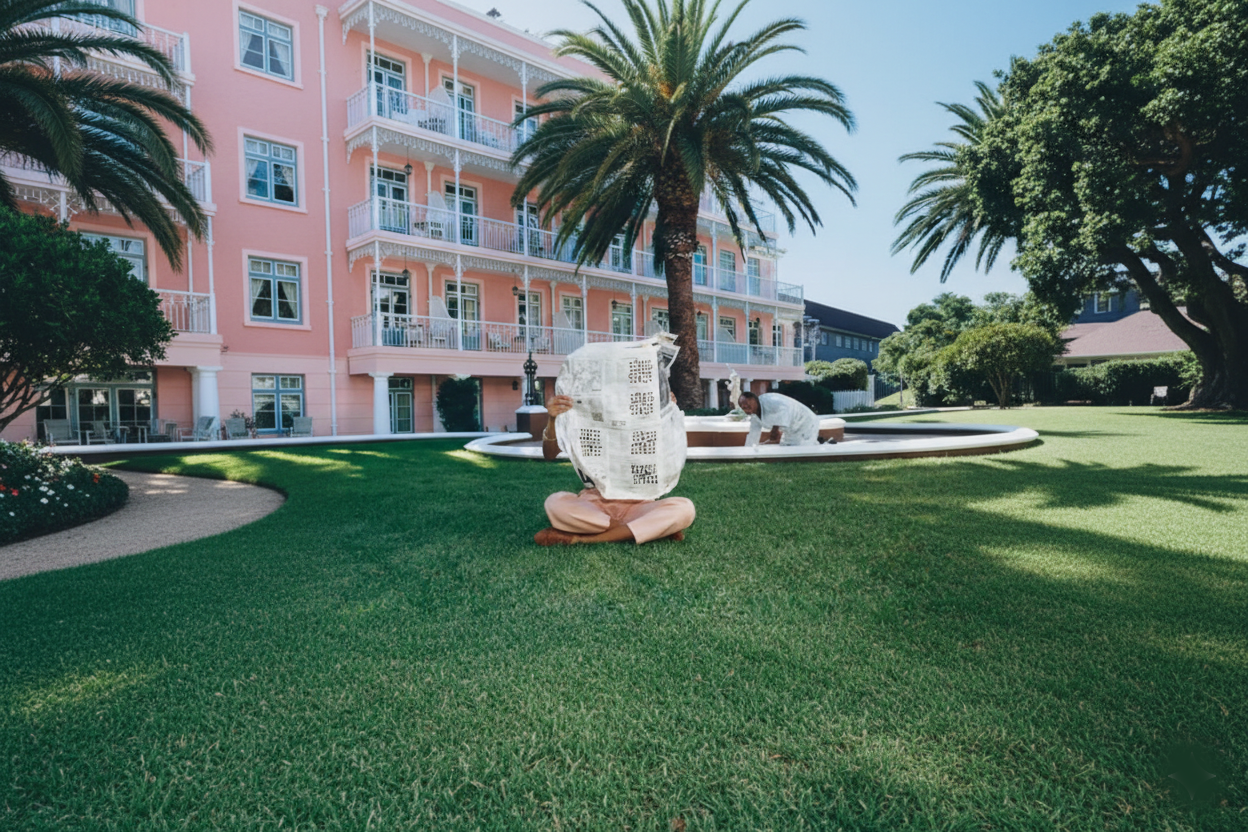
That broader industry recalibration provides important context for the latest move by Thebe Magugu, who recently expanded his footprint in Cape Town with two new openings – including a branded suite at the historic Mount Nelson and a new iteration of his Magugu House retail concept.
Rather than positioning Magugu as an outlier, his expansion is better understood as aligned with where fashion and retail are heading.
From Johannesburg Studio to Global Stage
Magugu founded his label in 2016 in Johannesburg after studying fashion design and developing a reputation for collections grounded in research and cultural storytelling. Early on, his work distinguished itself through its intellectual framework – examining African identity, post-colonial narratives, and contemporary politics through tailoring and print.
In 2019, he became the first African designer to win the LVMH Prize, a milestone that brought international visibility, financial support, and access to executive mentorship within the world’s largest luxury conglomerate, LVMH.
That recognition provided scale. What followed has been strategic consolidation.
Rather than pursuing aggressive wholesale expansion, Magugu has steadily built a tightly controlled brand ecosystem – most notably through Magugu House, first launched in Johannesburg as a hybrid retail, exhibition, and cultural space.
The Cape Town expansion builds on that foundation.
The Industry’s Experiential Turn
Magugu’s move mirrors a wider industry pivot toward experiential retail — a response to shifting consumer behavior, declining foot traffic in traditional stores, and the saturation of product-led growth.
Across global luxury, brands are investing in environments that extend beyond clothing racks.
Louis Vuitton has integrated cafés and exhibition spaces into flagship locations, transforming stores into cultural destinations. Gucci has launched branded dining concepts to deepen engagement beyond retail. Armani operates hotels that translate its design codes into architecture and hospitality. Dior has embedded restaurants and galleries within key global boutiques.
Even heritage American brands are evolving. Levi Strauss & Co. has experimented with flagship spaces designed as community hubs rather than purely transactional stores.
The strategic rationale is increasingly clear: when customers spend time in a branded space – whether dining, attending an exhibition, or staying overnight – the relationship shifts from transactional to relational.
It creates what retail analysts describe as “soft access.” A customer may not purchase that day, but they are within the brand’s orbit. Dwell time becomes equity.
A Holistic Brand Architecture
Magugu’s Cape Town suite at Mount Nelson reflects that same logic. The room functions less as a merchandising exercise and more as a physical extension of his aesthetic universe. Guests encounter his design language not only in garments but in textures, patterns, and curated objects.
Similarly, Magugu House in Cape Town operates as a multi-sensory environment – retail supported by cultural programming and spatial storytelling.
The approach aligns with a larger trend: brands are layering sensory and emotional touchpoints around their core product. Cafés, bookstores, museums, and salons are no longer ancillary; they are strategic infrastructure.
For independent designers, this model offers something particularly valuable: control. By owning the environment, a brand shapes how it is understood.
A Signal of Where Fashion Is Going
The broader retail landscape remains volatile. Digital commerce has compressed margins. Physical stores face pressure to justify their square footage. In that context, experiential formats are emerging as both defensive and offensive strategies – deepening loyalty while differentiating from online competitors.
Magugu’s expansion does not position him above the industry. Instead, it positions him within it – responsive to macro shifts and adapting accordingly.
For a designer whose early collections were built on research and narrative, the move into immersive spaces feels consistent. The storytelling has simply moved from fabric to floor plan.
If the next chapter of fashion is defined by holistic customer engagement – by brands that offer environments rather than inventory alone – then initiatives like Magugu’s Cape Town openings serve as case studies in how that evolution can unfold thoughtfully.
In an industry long focused on seasonal output, the emphasis is now on sustained presence.
And increasingly, the question for fashion is not just what are you selling – but what world are you inviting people into?


