
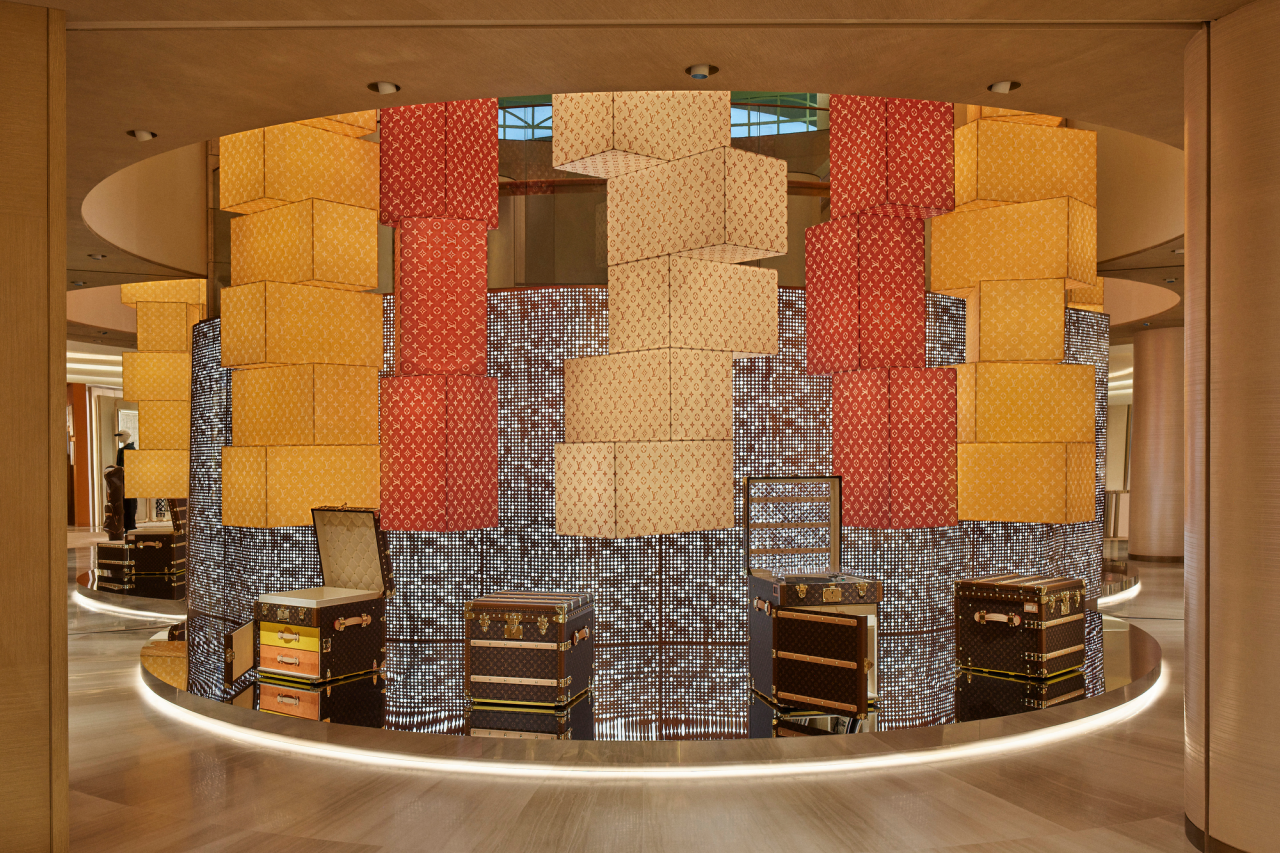
Louis Vuitton’s newest concept-store marks more than a major retail opening – it signals a fundamental change in how luxury brands imagine their physical spaces. As shopping habits shift dramatically and digital commerce strengthens its grip, LV’s boldest flagship to date suggests that the future of retail lies not in selling products, but in curating worlds.
Luxury retail’s evolution has long been underway, but the last five years have accelerated the urgency. Traditional boutiques – once temples of product – now compete with e-commerce platforms, social media economies, and consumers who increasingly value experience over transaction. For Gen Z especially, the store isn’t just a place to buy, but a place to belong, explore, document, and share. LV’s new flagship meets those desires head-on by merging retail with culture, hospitality, design, and immersion.
Inside, the store looks less like a boutique and more like a cross between a contemporary gallery, a private residence, and a design museum. The Objets Nomades furniture collection is displayed like sculptural work. Art installations sit alongside apparel. Hospitality elements – lounges, curated rooms, sensory materials – encourage lingering rather than moving quickly through the space. In some corners, a shopper may forget entirely that they’re inside a store at all.
This new blueprint is part of a broader movement toward “retailtainment”: retail that blends culture, entertainment, community, and storytelling. For Louis Vuitton, the concept-store becomes a physical manifesto. If the brand’s digital presence is about visibility, the flagship is about depth – a place to embody identity in three dimensions.
Several forces help explain why the shift is happening now. First, experiential consumption is rising. Younger consumers no longer seek luxury purely through ownership; they seek it through meaning, aesthetics, and emotional resonance. Second, digital channels have eroded the traditional purpose of physical stores. If a bag can be purchased online, the in-person visit must offer something digital cannot: ambience, presence, hospitality, and discovery. Third, luxury brands are expanding into broader lifestyle categories – from furniture to fine dining – and need physical formats capable of expressing those worlds cohesively.
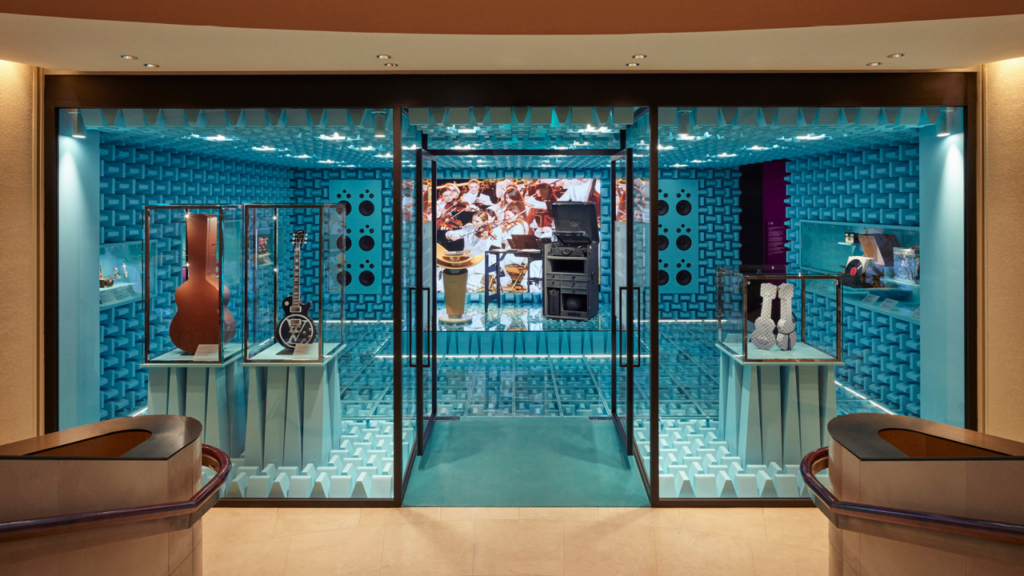
For Gen Z, this approach feels intuitive. They view retail not as a closed transaction but as an open environment—one that intersects community, identity, and creativity. A flagship like LV’s becomes a cultural space, a social moment, and a design experience. Whether they make a purchase or simply absorb the brand’s atmosphere, younger shoppers walk away with something valuable.
The implications extend far beyond Louis Vuitton. As more luxury houses grapple with declining foot traffic and rising digital behaviors, the race is on to create flagship environments that are sensorial, narrative-rich, and deeply human. These “cultural boutiques” blend architecture, art, hospitality, and product into something that feels less like a store and more like a universe.
LV’s new concept-store underscores a simple truth: the brands that thrive in the next decade will be those that build places worth stepping into. Retail is no longer about what a store sells, but how it makes you feel. In an era when shopping can be done in seconds on a phone, the physical flagship has been reborn as cultural infrastructure – part experience, part community hub, part aesthetic journey.


