Speaking on an investor webcast following Pepkor’s half-year results to the end of March 2026, chief operating officer Sean Cardinaal offered a measured assessment of the group’s newest fashion venture.
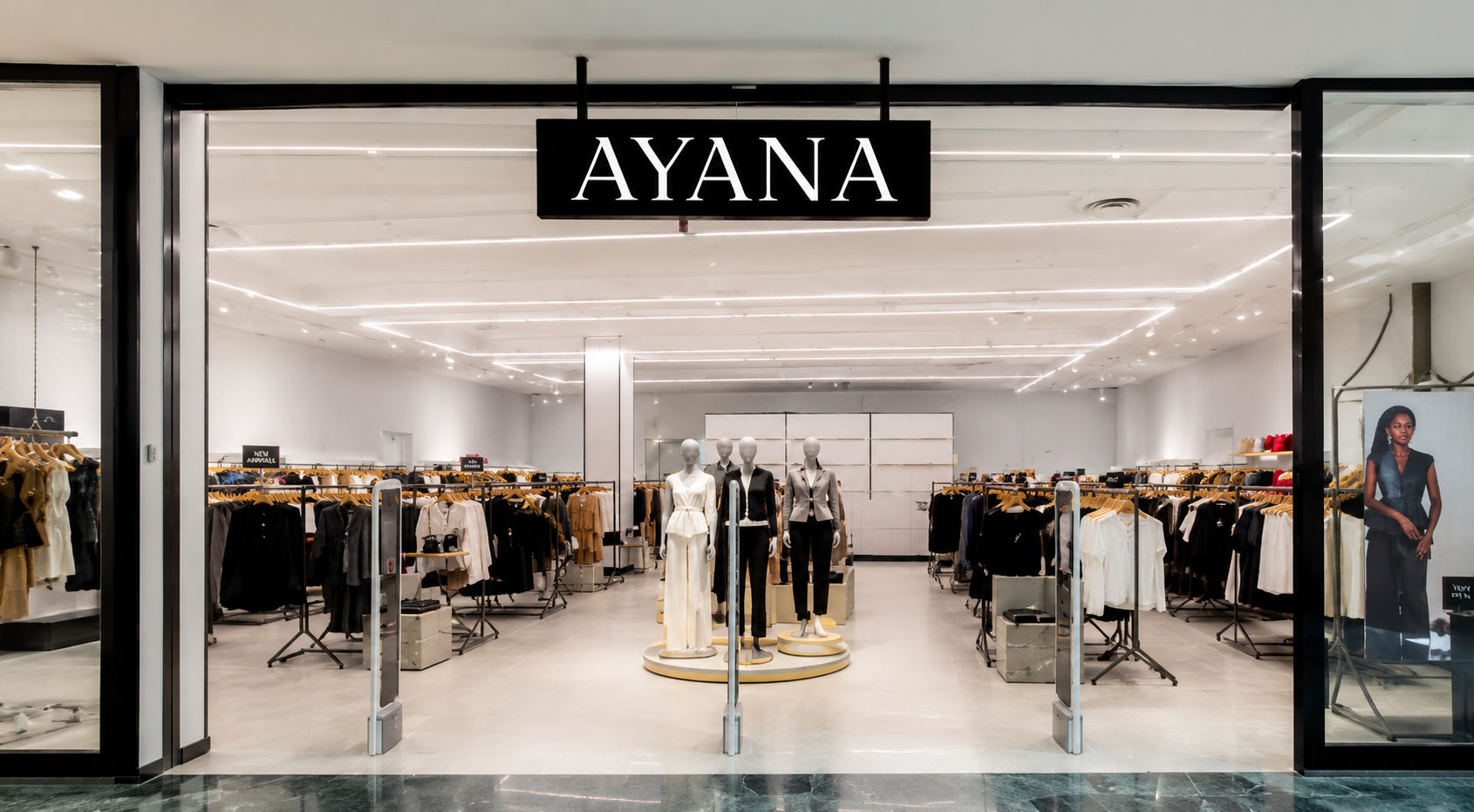
Ayana, he said, had delivered “good trading densities and margins” since its launch in February 2025. However, he added that the “jury is still out on the commercial scalability of the brand.”
It’s a statement that deserves closer examination.
On the surface, it may sound like caution. In reality, it highlights a key distinction that investors and consumers alike should understand. Pepkor is not questioning whether Ayana can attract customers. The question is whether the model can be replicated successfully across a much larger footprint.
And based on what customers are saying, the brand’s biggest challenge may not be demand at all.
It may be geography.
Understanding Ayana’s Origins
To understand where Ayana is today, it is important to understand where it came from.
Before Ayana entered the market, Pepkor had already been testing the women’s fashion opportunity through Ackermans Women. That concept effectively served as a live pilot, allowing the retailer to assess customer demand, merchandise strategy and operational viability before introducing Ayana as a standalone brand.
In many respects, Ayana represents the evolution of an experiment that had already been running inside the Pepkor ecosystem.
That context matters because the brand remains in its infancy, at 14months old. Having launched only a little over a year ago, Ayana is still navigating the early stages of its growth journey. Judging its long-term prospects today would be similar to evaluating a marathon runner after only the first few kilometres.
What matters more is whether the underlying signals are positive.
So far, they appear to be.
The Product Is Connecting
One of the most interesting aspects of the Ayana story is that customer feedback is largely positive.
Consumers consistently praise the product offering, highlighting pieces such as tailored waistcoats, elevated basics and sophisticated workwear-inspired fashion. The brand has positioned itself in a space between affordability and aspiration, giving women access to trend-conscious fashion without premium price tags.
More importantly, customers appear emotionally invested in the brand.
They’re not simply buying because they need clothing.
They’re buying because they genuinely like what Ayana is creating.
In retail, that kind of connection is difficult to manufacture and often takes years to establish.
Ayana appears to have achieved it within its first year.
The Real Friction Point
Yet alongside the positive feedback sits a recurring message from customers:
“We need stores closer.”
Across social media platforms and customer discussions, shoppers repeatedly ask when Ayana will arrive in their area, their city or their preferred shopping centre.
The complaint is remarkably consistent.
Not the pricing.
Not the quality.
Not the product selection.
The location.
For the modern consumer, convenience has become one of the most valuable currencies in retail. Every additional kilometre travelled, every extra taxi fare and every unnecessary detour creates friction.
Customers should not have to plan an entire day around visiting a store they already want to shop at.
This is particularly important given the audience Ayana is targeting. Working professionals, mothers, students and entrepreneurs increasingly value accessibility alongside affordability. Time has become just as important as money.
The implication is significant.
Ayana’s challenge may not be product-market fit.
It may be distribution-market fit.
Why Location Is More Than Real Estate
Retail success has always been influenced by location, but today’s environment makes it even more critical.
The best-performing retail brands understand that a store is not simply a place to transact. It is a marketing asset.
Being present in major malls and high-traffic retail destinations puts a brand directly in front of existing consumer demand. Every visit to a shopping centre becomes a potential interaction with the brand.
For Ayana, expansion into key regional malls and primary retail hubs could prove more valuable than additional advertising spend.
Customers are already creating awareness.
They are already generating demand.
The next step is reducing the distance between discovery and purchase.
Pepkor Has the Tools to Execute
The encouraging aspect of this challenge is that Pepkor has already demonstrated an ability to scale successful retail concepts.
The group’s latest interim results highlighted the strength of its operating model, with revenue increasing by 13.2% and headline earnings growing by 19.6%.
Those numbers reflect more than financial performance. They demonstrate operational discipline, execution capability and a deep understanding of consumer retail.
Pepkor has built one of Africa’s largest retail footprints by identifying opportunities, refining concepts and expanding them efficiently.
The same capabilities that drove growth across the broader group will now be tested with Ayana.
Listening as a Growth Strategy
Importantly, the feedback emerging around Ayana should not be interpreted as criticism.
It should be interpreted as market intelligence.
When customers repeatedly ask for stores closer to them, they are signalling demand. They are effectively identifying the next growth opportunities for the business.
The most successful retailers are not necessarily the ones with the most stores.
They are the ones with the most accessible stores.
Ayana’s first year was about proving that South African women would embrace the brand’s fashion proposition.
The response suggests they have.
Its second year should be about accessibility, convenience and strategic expansion into the retail centres where customers naturally live, work and shop.
The product is already connecting.
The market is already responding.
Now the geography needs to catch up.