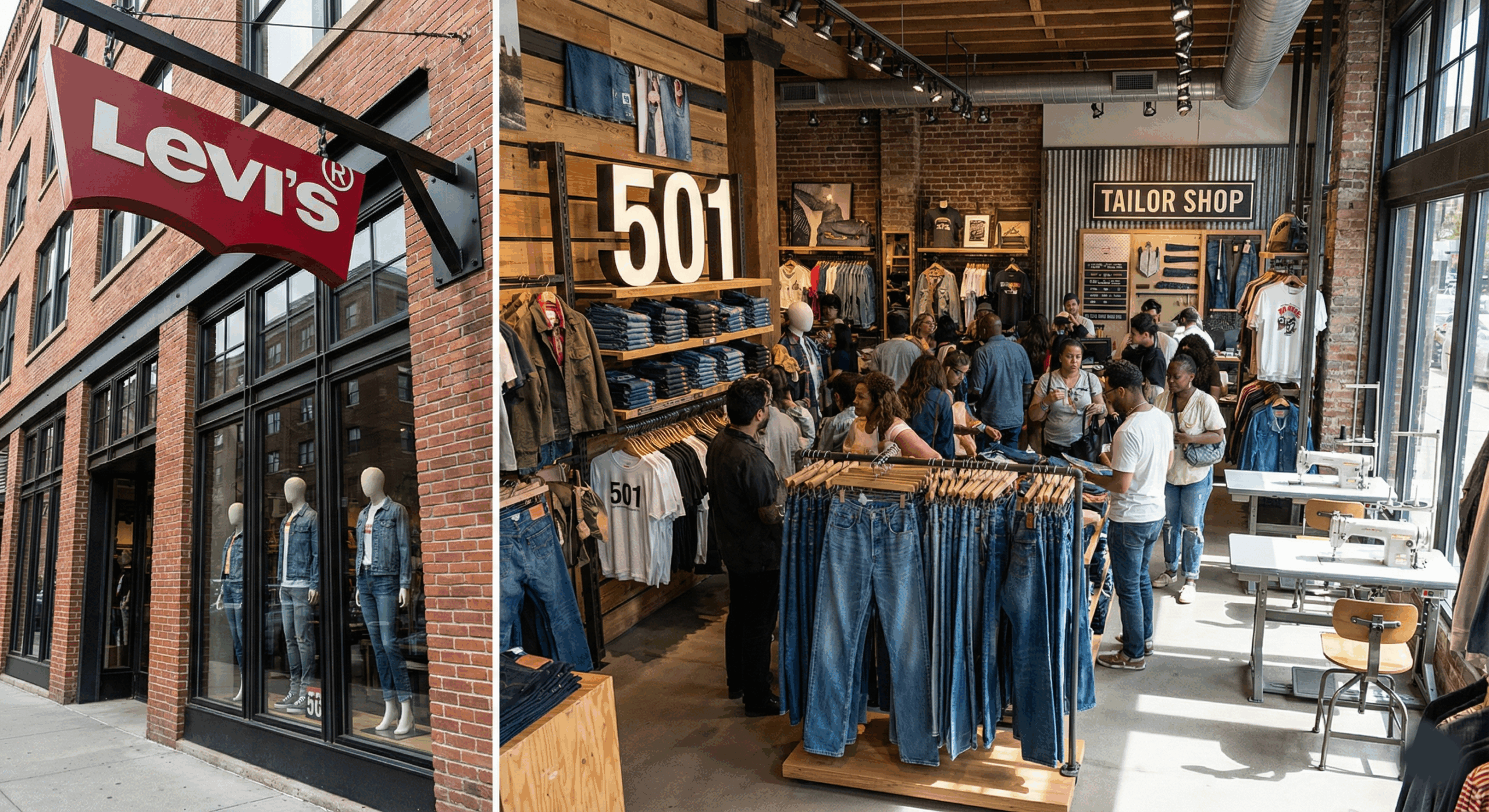
In an era where many brands expect consumers to adapt to their vision, Levi’s is flipping the script entirely. With the opening of its biggest store in Italy – a flagship in central Milan – Levi’s is making a bold statement about what modern retail should be: responsive, customer-centric, and adaptive. Rather than expecting shoppers to change their habits, Levi’s is evolving around customers, tailoring the shopping experience, store layout, merchandise mix and service offerings to match what customers actually want. This approach fits with the DTC-first strategy the company has been increasingly embracing and that led Levi’s to open 700 doors in Europe, including 650 stores and 50 units in concession or shop-in-shop format.
That shift is central to brand growth: by listening to shoppers, understanding their changing preferences for denim lifestyle, womenswear, and curated collections, and delivering what resonates locally and culturally, Levi’s is strengthening its relevance and deepening customer loyalty.

A Store Designed for Ease, Comfort and Discovery
Inside the new Milan store, thoughtful design and layout make exploration effortless. Spanning two levels and described as a “creative hub,” the space uses natural materials, curated lighting and scenographic installations – from wood-slatted ceilings nodding to Milanese architecture to display windows that feel more like exhibits than racks. The store is laid out so that all categories, from iconic 501® jeans to seasonal fits, outerwear, accessories and head-to-toe outfits, are easy to find and appealing.
That ease of navigation is not just convenience: it turns shopping into a welcoming, motivational experience. Customers don’t have to “work” to find what they want – the store adapts to them.
Omnichannel in Action: How Online + Offline Work Together
Levi’s embraces more than just physical retail – the brand combines its stores with robust digital infrastructure and a strong loyalty program (Red Tab) to deliver a fully connected, omnichannel shopping journey. From browsing or purchasing online, to picking up or returning in-store, Levi’s ensures customers can shop “whenever, wherever, however they prefer.” This flexibility increases convenience, broadens reach, and reduces friction.
Importantly, even in a digital-first world, physical stores remain a vital touchpoint. They do more than sell, they bring the brand to life. Deliver sensory and emotional experiences. Provide personal service, and help build meaningful relationships. In many cases, physical stores also support logistics: fulfilling online orders, enabling quick delivery, and serving as hubs for click-and-collect or returns – making them strategic linchpins in a modern omnichannel network.
The Importance of Physical Stores – Now More Than Ever
Despite the rise of e-commerce, real-world retail remains essential. Many shoppers still want to touch, try on, and see products in person. For some, speed or immediacy matters: they don’t want to wait for delivery. For others, it’s about service – getting advice, tailoring, or a human touch.
Because of this, physical stores continue to contribute significantly to overall retail – not only as sales points but as brand-defining spaces where customers form emotional attachments, feel a sense of belonging, and develop loyalty. For a brand like Levi’s, combining the strengths of physical retail with digital convenience and data-driven personalization through omnichannel strategy gives them the best of both worlds – maximizing reach, convenience, and brand experience simultaneously.
What This Means for Levi’s – And Why It Matters
By changing for customers rather than forcing them to adapt, by investing in well-designed physical spaces, and by integrating online and offline channels through omnichannel strategy, Levi’s isn’t just selling jeans. It’s building relationships.
This approach boosts brand loyalty and trust – customers feel seen, valued and understood. It gives flexibility – hoppers can seamlessly move between online and physical environments depending on their preferences. It elevates the retail experience – from browsing to buying to after-sales. The journey feels cohesive and consistent. And it future-proofs the brand – in a world of shifting consumer habits, hybrid retail (physical + digital) offers resilience and adaptability.