The Spanish fast-fashion giant is deploying immersive technology to tackle the $800 billion elephant in the room: returns.
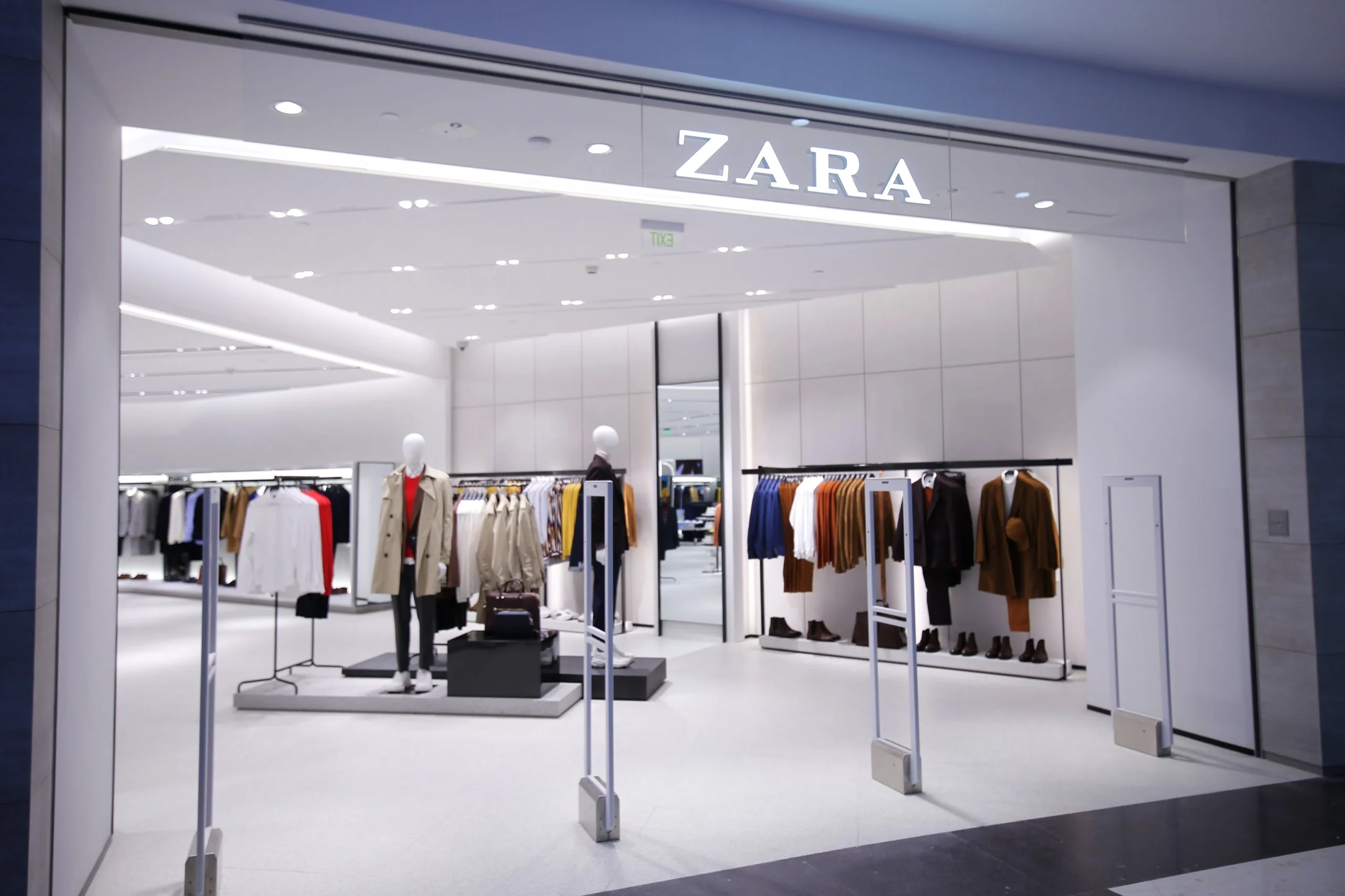
Walk into any Zara in the world and the experience is deliberate: sharp lighting, curated rails, a pace that nudges you toward impulse decisions. For decades, that choreography was the brand’s competitive edge. Now Zara’s parent company, Inditex – the world’s largest fashion retailer – is attempting to replicate it online. And the battleground isn’t social media or same-day delivery. It’s the fitting room.
Zara has quietly rolled out virtual try-on technology that allows shoppers to watch garments move on digitally rendered bodies through their smartphone screens or in-store digital displays – a direct assault on what the fashion industry calls its single most expensive operational headache: returns.
“Returns aren’t a customer service issue. They’re a business model issue – and the industry has been losing that argument for years.”
A Problem Measured in Billions
The numbers are staggering. Global fashion return rates for online purchases sit between 30% and 40% – more than double those in physical retail. For every ten items shipped, three or four make the round trip back. The costs compound quickly: reverse logistics, inspection, restocking, repackaging. In some cases, returned goods are simply incinerated or landfilled rather than resold.
Beneath the logistics problem is a more fundamental one: online shoppers cannot try clothes on. A ‘medium’ at one brand fits like a ‘small’ at another. Fabric weight, cut geometry, and seasonal construction variations all alter how a garment sits on a body in ways no size chart can fully encode. So consumers hedge. They order two sizes, three colourways – knowing they’ll return most of it. The industry term for this is ‘bracketing,’ and it has become so normalised that retailers have effectively budgeted for it.
That era may be coming under pressure.
What Zara Is Actually Building
Zara’s virtual try-on initiative isn’t a gimmick filter or an avatar builder. The technology layers augmented and mixed-reality rendering onto product presentation, allowing customers to see garments in motion – how a dress falls when walking, how trousers sit at the hip, how an oversized blazer drapes across the shoulders. Static model photography has always frozen the garment at its most flattering angle. This moves.
The significance isn’t purely technological – it’s strategic. Inditex operates over 5,600 stores across 96 markets and commands one of the most sophisticated supply chains in global retail. When a company of that scale makes a bet on experiential technology, it doesn’t stay a pilot for long. What begins in Zara’s digital flagship typically scales fast, and competitors watch closely.
The goal isn’t perfection. It’s reducing the gap between what a customer imagines and what arrives at the door.
The Harder Problem: Confidence, Not Just Fit
The fashion industry has long misframed the returns problem as a sizing problem. It’s not – or not entirely. People return clothes because the item didn’t make them feel the way they imagined it would. A blazer may technically fit. But if the shoulder falls two millimetres off, if the colour reads differently under home lighting, if it doesn’t match the energy of the product page – it goes back.
This is where virtual try-on technology has the most disruptive potential. Showing garments in motion, in varied contexts, with realistic drape simulation doesn’t just inform the purchase. It recalibrates expectations. And a customer whose expectations are aligned with reality is a customer who keeps what they ordered.
Industry analysts suggest that even a 10–15% improvement in return rates would represent transformative margin recovery for large-scale fashion retailers. At Inditex’s volumes, that’s not incremental improvement. It’s a structural shift.
Beyond Zara: The Broader Technology Race
Zara is not alone in this space, but it may be the most consequential player to enter it. Other brands are pursuing body-scanning integrations, AI-driven size recommendation engines, and personalised avatar systems trained on customer purchase and return history. The approach varies widely in sophistication and, frankly, in usefulness.
What distinguishes Zara’s move is deployment at scale. Most virtual try-on experiments live inside startup decks or limited beta rollouts. Inditex has the retail footprint, the engineering infrastructure, and the inventory velocity to stress-test this in ways no emerging-market player can. If the data validates the technology – and early signals suggest it does – the industry will follow.
The longer arc points toward a convergence of tools: AI sizing algorithms learning from return behaviour, fabric simulation engines growing more accurate, personalised digital profiles built across a customer’s purchase history. None of these are science fiction. Most of the components exist. The hard part is stitching them together at consumer scale.
The Fitting Room, Reimagined
Online shopping is not slowing down. Global e-commerce penetration in fashion continues to rise, even as the sector grapples with post-pandemic recalibrations. The brands that will define the next decade of retail are those that close the experiential gap between clicking ‘add to cart’ and opening the box – and what they find inside matching what they imagined when they bought it.
Zara’s virtual try-on play is an early-stage answer to a very old question: how do you sell clothes to someone who can’t feel them? It won’t solve everything. Bodies are too varied, style too subjective, perception too personal. But it is, at minimum, the most serious technological attempt the mainstream fashion industry has made to confront a problem it has spent twenty years calling unsolvable.
The fitting room isn’t going anywhere. It’s just moving to your phone.