
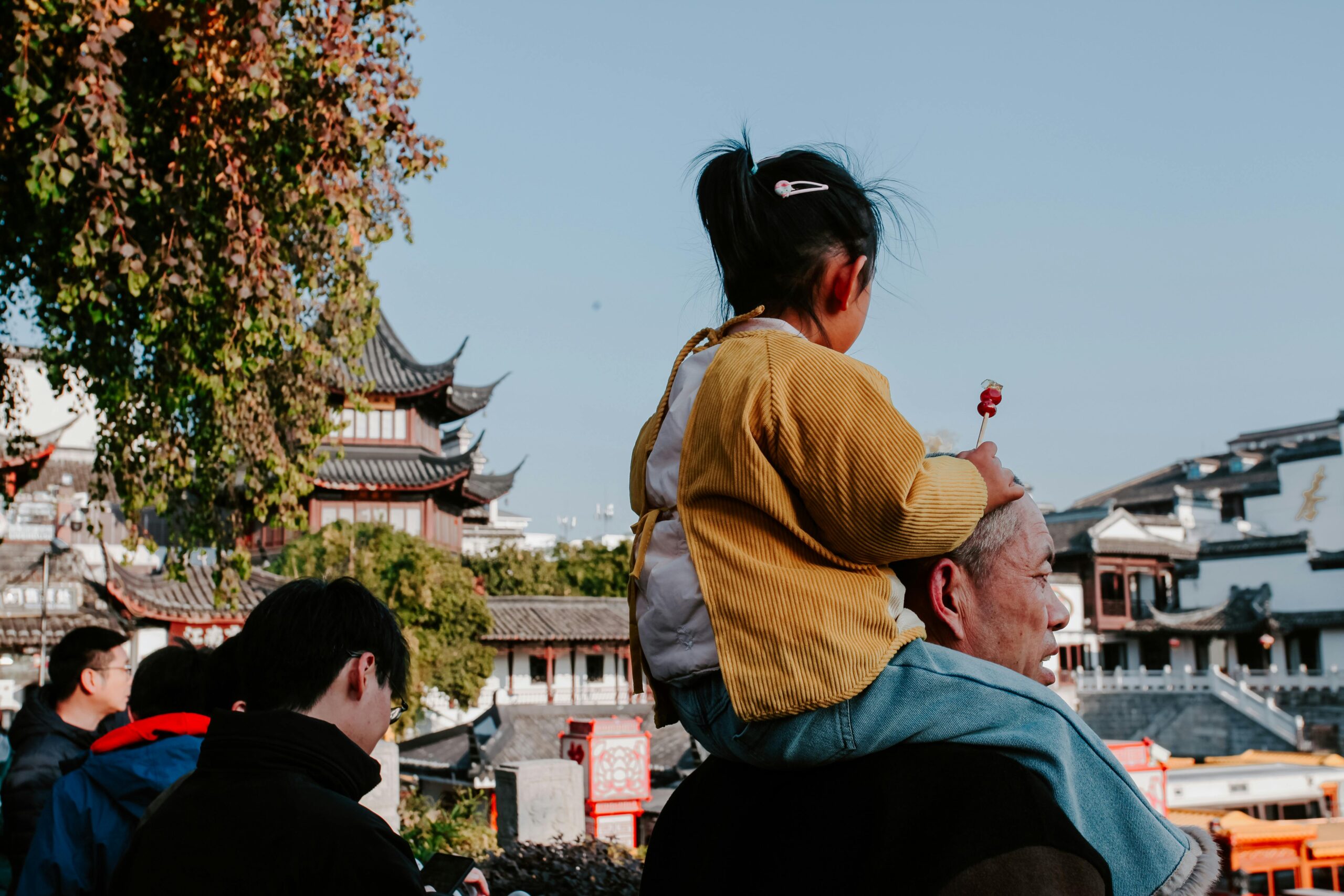
China’s birth rate has just hit a record low. New government data reveals that the country’s birth rate has fallen to 5.6 per 1,000 people, the lowest level since the Communist Party took power in 1949. Last year alone, China’s population declined by more than 3 million people. The United Nations warns that if this trend continues, the country could lose up to half of its current population by 2100.
For policymakers, the figures signal a demographic emergency. For the fashion industry, both global and domestic – they mark a structural shift that will reshape consumption, growth strategies, and product design for decades to come.
A Demographic Crisis Moves to the Foreground
China’s population slowdown is no longer theoretical. Falling marriage rates, rising living costs, urban pressure, and changing social values converge to produce a sustained collapse in births. Unlike cyclical downturns, demographic decline is slow-moving and difficult to reverse, with long-term consequences for labour supply, consumer demand, and economic momentum.
For fashion, an industry historically driven by young consumers and expanding middle classes, the implications are profound.
Beijing’s Policy Reversal: From Control to Incentive
In response, the Chinese government is rolling out a series of pro-natalist measures that underscore the urgency of the crisis:
- Simplified marriage registration, reducing administrative barriers to family formation
- Annual subsidies of approximately $500 per child, offering direct financial incentives to parents
- Three years of free preschool, easing one of the most significant cost burdens of raising children
- Higher taxes on condoms, a controversial signal of the state’s willingness to influence reproductive behaviour
The shift represents a dramatic reversal from decades of population restriction. China now actively seeks population growth, framing childbirth as an economic necessity rather than a private choice.
Immediate Impact on China’s Domestic Fashion Market
Even before long-term population changes fully materialise, the fashion industry in China feels the effects in real time.
Demand for children’s apparel softens as birth numbers decline. At the same time, delayed marriage and parenthood extend individual-focused consumption – but not necessarily at higher volumes. Consumers become more selective, prioritising versatility, value, and longevity over trend churn.
Households shrink. Wardrobes do too.
An Aging Consumer Base Reshapes Fashion Demand
As China’s population ages, the fashion market shifts away from youth-led volume growth toward older, more pragmatic consumers. This accelerates several existing trends:
- Slower fast-fashion cycles
- Greater emphasis on comfort, function, and durability
- Growth in premium basics, minimalist design, and understated luxury
- Rising relevance of wellness-oriented and adaptive apparel
With fewer young consumers driving experimentation, trend velocity slows. Fashion becomes less about constant novelty and more about long-term wearability.
Global Fashion Brands Rethink China’s Growth Story
For international brands, China has long been positioned as an engine of endless growth. That assumption now requires recalibration.
A shrinking population and aging demographic suggest:
- Slower expansion in entry-level and youth-driven segments
- Increased focus on affluent, older consumers
- Greater pressure to seek growth in younger emerging markets outside China
At the same time, if Beijing’s policies prove even partially effective, future demand could re-emerge in maternity wear, childrenswear, and family-oriented retail – but demographic recovery unfolds over decades, not seasons.
A Structural Shift, Not a Short-Term Shock
China’s low birth rate represents a fundamental transformation, not a temporary disruption. For the fashion industry, it signals a move away from scale-driven expansion toward precision, segmentation, and value creation.
While global attention remains fixed on geopolitics and financial summits, demographic change quietly rewrites the rules of consumption. For fashion brands operating in – or dependent on China, understanding this shift is no longer optional. It is central to long-term strategy.


