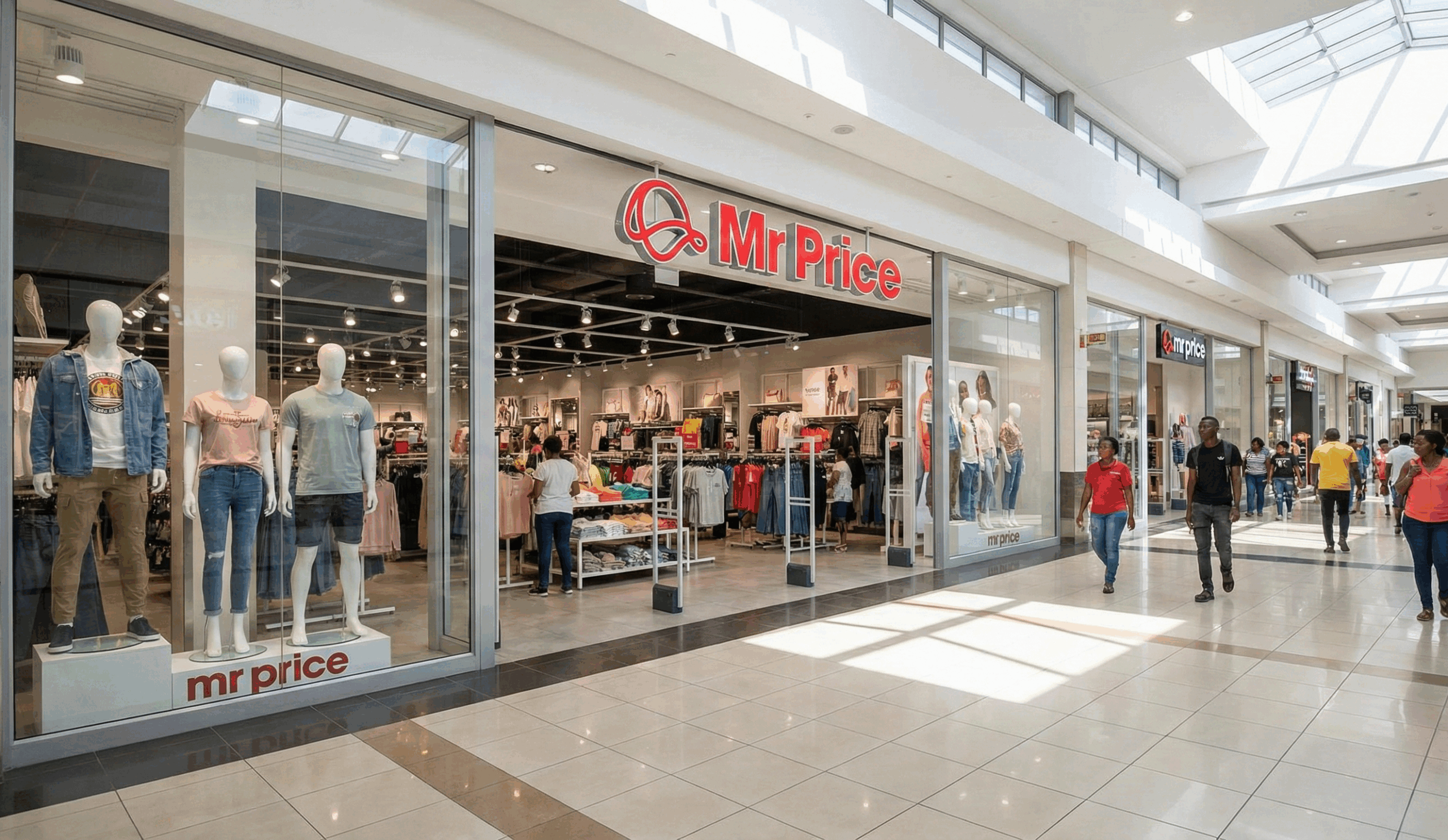
Mr Price’s interim results reveal resilience amid a pressured consumer environment – R18.6 bn revenue, 5.5% retail sales growth, rising dividends, and strong cash reserves. Here’s what it means for the South African fashion-retail landscape.
Mr Price’s Solid Half-Year in Context
In a climate defined by weakened consumer buying power, Mr Price Group has delivered a set of results that blend cautious optimism with strategic discipline. For the 26 weeks ended 27 September 2025, the retailer reported total revenue of R18.6 billion, reflecting a 5.4% increase year on year. Retail sales rose by 5.5% to reach R17.8 billion, marginally outpacing the market growth rate of 5.3%. Headline earnings per share reached 513 cents, representing an increase of 6.5%, while the group also expanded its gross profit margin by 30 basis points to reach 40%, despite the difficult and heavily promotional retail environment. Operating margin ticked upward to 11.5%, demonstrating the brand’s firm control of overheads and disciplined cost management.
Mr Price’s balance sheet remains significantly cash-positive, boasting R3 billion in cash resources – a notable 37.7% increase from the previous period. The company declared an interim dividend of 323.2 cents per share, up 6.5%, maintaining a payout ratio of 63%, underscoring its consistency in returning value to shareholders. The retailer continued its sizeable store rollout strategy, adding 91 new stores to bring its total footprint to more than 3,100 locations. Importantly, the business maintained a predominantly cash-based sales mix, with 88.2% of transactions made in cash, while credit sales grew a modest 4.3%. Online retail also continued to show momentum, recording 9.7% sales growth as consumers increasingly blend physical and digital shopping experiences.
A Candid Warning: The South African Consumer Remains Stressed
Despite the strength of these financial indicators, Mr Price’s messaging reflects an acute understanding of the pressures shaping the South African retail landscape. The company cautioned that the local consumer remains under extreme financial pressure. Over the past two years, real wage growth has turned negative, eroding household budgets and shrinking discretionary spending power. While headline inflation and interest rates have shown slight moderation, the retailer notes that short-term macro improvements have not yet translated into meaningful financial relief for most South Africans. As a result, consumption remains cautious, especially in discretionary categories such as fashion.
Consumer confidence also remains subdued. Even for a value-driven retailer such as Mr Price, this environment presents risks and volatility. The early performance of the second half highlights this fragility: in the first seven weeks, retail sales growth slowed to 3.3% year on year, a noticeable moderation compared to the strong 12.3% growth base recorded in the previous period. These numbers suggest that while the first half of the year delivered steady progress, the momentum heading into the latter part of the fiscal year is less certain.
Why These Numbers Matter for Fashion Retail
Mr Price’s results offer a clear window into the dynamics shaping South African apparel retail. The company’s performance reaffirms that value fashion continues to outperform other segments of the market, drawing consumers who are increasingly price-sensitive. Mr Price’s predominance of cash sales demonstrates a customer base determined to avoid debt in a high-interest environment, which positions the group favourably versus retailers more reliant on credit offerings. The strong growth in the online channel also shows that even in a value-led environment, digital shopping is gaining steady traction, and brands that invest in seamless omni-channel experiences are likely to maintain relevance.
Margin expansion in the current climate is particularly noteworthy. With retailers across the country caught in escalating promotional cycles, Mr Price’s ability to widen its margins suggests a highly refined approach to buying, pricing, and inventory management. The group’s bold push into physical expansion, evidenced by its 91 new stores, signals a deep confidence in accessible fashion’s resilience. At a time when many retailers are slowing expansion or rationalising their estates, Mr Price is making a territorial play, seeking to capture market share wherever value-based fashion demand remains strong.
Strategic Observations & Long-Term Outlook
Beyond the headline numbers, Mr Price’s commentary points toward key structural and strategic considerations shaping the future of South African fashion retail. Supply-chain stability appears to be improving, supported by better performance at the Durban port, which has reduced stock-outs and improved merchandise flow. For fashion retailers, who often depend on fast turnaround and seasonally sensitive inventory, improvements in logistics can provide a crucial competitive edge.
The company also notes that the value-seeking consumer is becoming a permanent feature of the South African market, rather than a short-term response to economic pressure. This behavioural shift has long-term implications for pricing, assortment planning, and promotional strategy across the entire sector. Mr Price’s cautious optimism for 2026 hinges partly on expectations that declining inflation and eventual interest-rate cuts may restore some equilibrium to consumer finances. However, the company also acknowledges that macroeconomic improvements must be sustained for any meaningful recovery in discretionary fashion spend. Additionally, the performance of newly opened stores will be closely watched, as their success or cannibalisation potential will influence future expansion strategy. The group’s conservative approach to credit – maintaining strict affordability criteria – suggests a prudent approach to risk as the macro landscape remains uncertain.
Conclusion: A Fashion-Retail Balancing Act
Mr Price’s latest half-year performance underscores the dual reality of South African fashion retail: solid execution and brand strength on one hand, and a deeply constrained consumer environment on the other. Its ability to grow revenue, expand margins, strengthen its balance sheet, and continue rolling out stores reflects operational excellence within a value-led model. At the same time, the retailer’s own warning about the fragile consumer landscape highlights the complexities facing fashion retailers across the country.
The overarching narrative is one of disciplined resilience. Mr Price’s strategy of delivering affordable fashion while tightly managing costs has positioned it to weather economic uncertainty more effectively than many competitors. As the sector looks ahead to 2026, the retailer’s performance provides both a benchmark and a barometer – illustrating how value-driven fashion continues to shape how South Africans shop, and how even the strongest players must navigate cautiously in an environment marked by pressure, volatility, and evolving consumer behaviour.