A New Chapter for Chanel
The Autumn/Winter 2026 runway presentation from Chanel marked one of the most closely watched moments of Paris Fashion Week. At the center of attention was Matthieu Blazy, the designer tasked with steering the historic house into its next creative phase. Known for his craftsmanship-driven approach and intellectual sensibility, Blazy’s interpretation of Chanel’s codes signals a strategic evolution rather than a radical departure. His Autumn/Winter 2026 collection suggests that the future of the brand lies in refining and recontextualizing its heritage rather than abandoning it.
Matthieu Blazy’s Background and Vision
Blazy arrives at Chanel with a reputation built across some of the most influential fashion houses of the past two decades. Prior to his role at Chanel, he held positions at Maison Margiela, Celine, and Calvin Klein before gaining industry-wide recognition as creative director at Bottega Veneta. Throughout his career, Blazy has developed a design philosophy rooted in material innovation, technical craftsmanship, and conceptual storytelling. This background shapes his approach at Chanel, where the challenge lies in evolving a brand defined by icons without diluting their significance.
The Autumn/Winter 2026 Collection
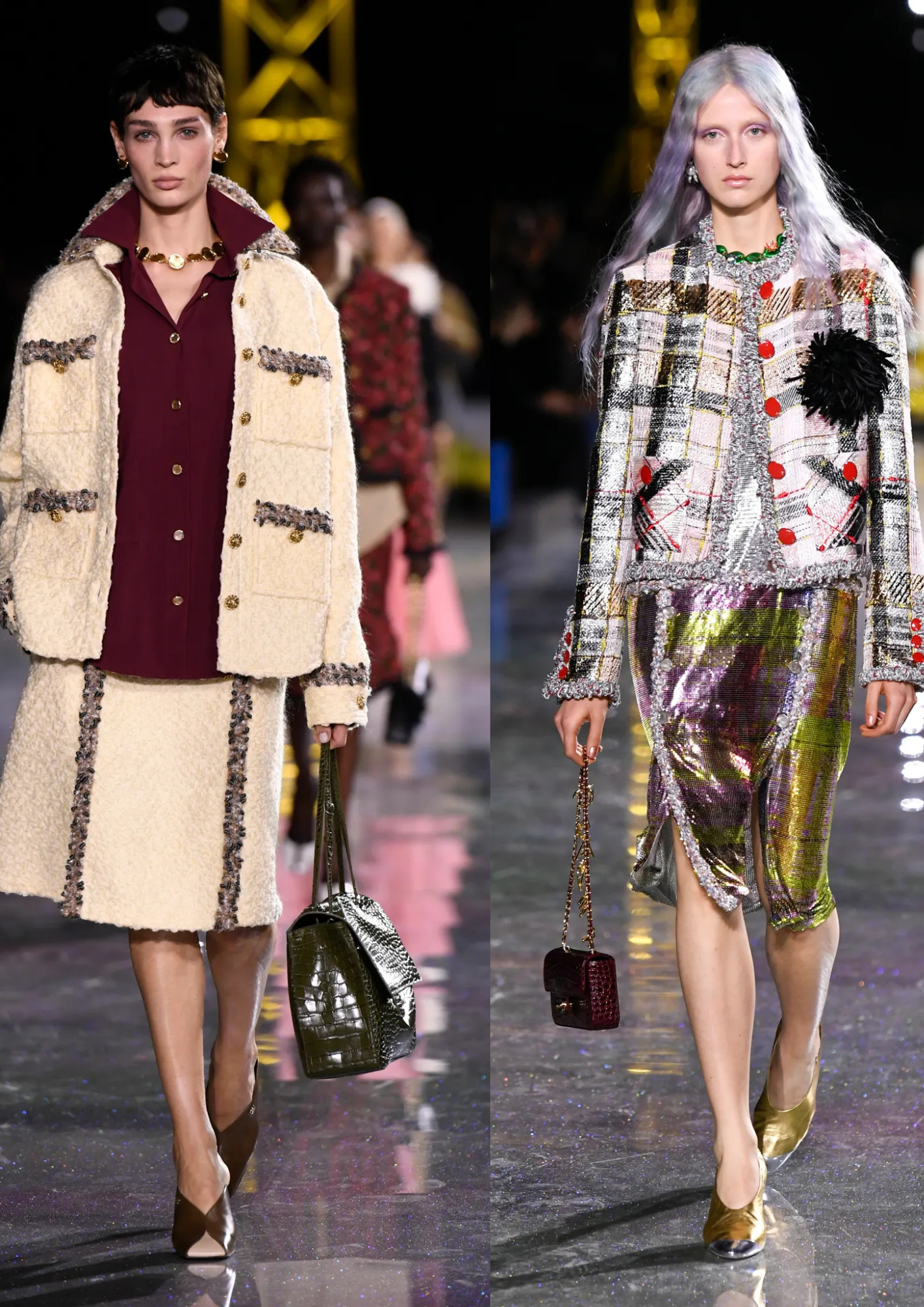
The Autumn/Winter 2026 collection unfolds as a study in transformation. Blazy begins with Chanel’s most recognizable garments – structured knitwear, tailored jackets, and reimagined tweed suits – before gradually introducing more experimental textures and silhouettes. Metallic surfaces, silicone-woven tweeds, and layered constructions push the traditional Chanel aesthetic into new territory. References to 1920s silhouettes, including dropped waistlines and elongated proportions, subtly echo the revolutionary spirit of Coco Chanel, who originally reshaped women’s fashion by prioritizing freedom and movement. The collection ultimately progresses toward fluid eveningwear and embellished gowns, creating a narrative that moves from restraint to spectacle.
The Designer’s Touch
What distinguishes Blazy’s work is his ability to reinterpret established design codes through construction and materiality. Rather than simply updating Chanel’s visual identity, he focuses on the tactile and structural qualities of the garments themselves. Tweed appears lighter and more fluid, tailoring feels less rigid, and silhouettes appear elongated and softened. These shifts introduce a contemporary sensibility while maintaining the house’s recognizable DNA. Blazy’s emphasis on texture, movement, and craftsmanship reinforces the idea that luxury today is increasingly defined by depth of design rather than overt spectacle.
Chanel’s Future Under Blazy
Blazy’s Autumn/Winter 2026 collection suggests a broader strategy for Chanel’s creative direction. Instead of dramatic reinvention, the designer is pursuing a gradual recalibration of the brand’s visual language. This measured evolution reflects the realities of modern luxury, where heritage houses must balance innovation with continuity. By carefully reframing Chanel’s most iconic elements, Blazy demonstrates how a brand rooted in history can remain culturally relevant while preserving its identity. In doing so, he positions Chanel for a future defined by thoughtful transformation rather than abrupt change.