
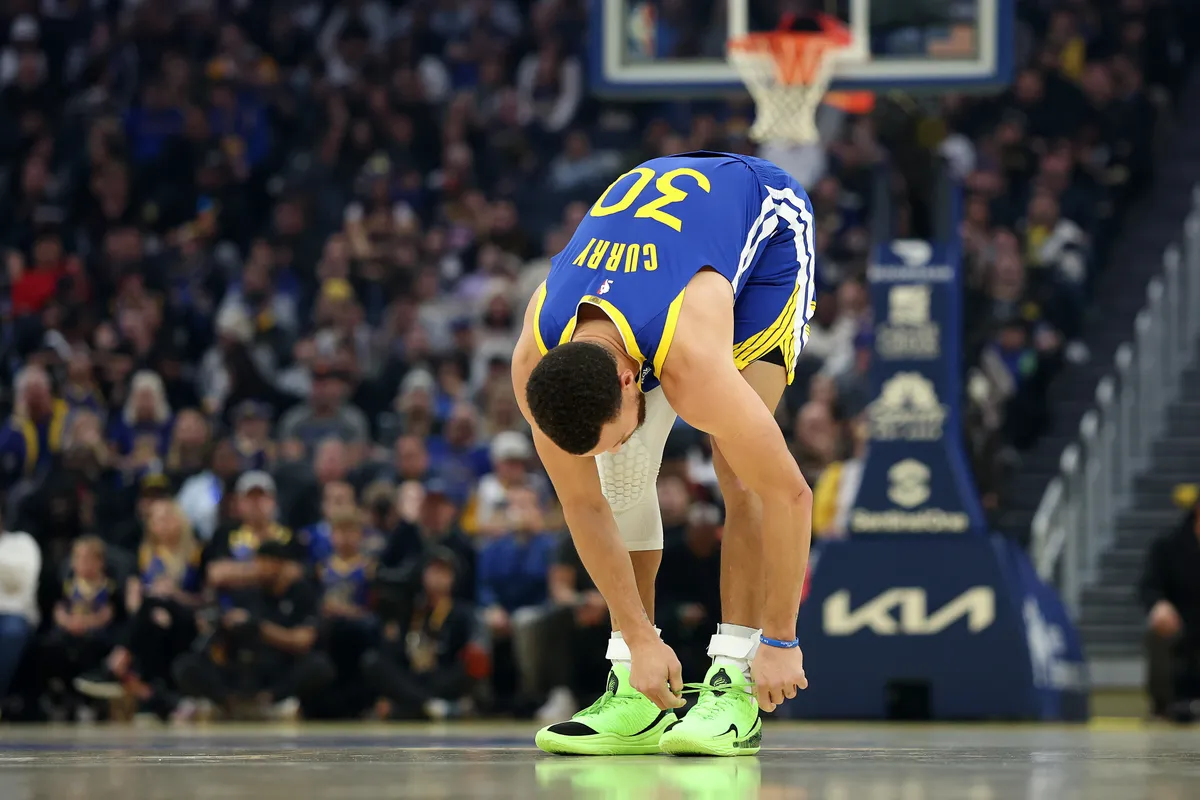
After more than a decade together, Stephen Curry and Under Armour have officially parted ways — a move sending ripples across the sports, fashion, and entertainment industries. Their partnership, which began in 2013, wasn’t just another athlete-endorsement deal. It helped define modern athlete branding, led to the birth of the Curry Brand, and positioned Curry as one of the most influential figures in performance footwear. Now, with the two sides going independent, the split marks the end of an era -and the beginning of a new one.
When Curry signed with Under Armour, he wasn’t yet the global phenomenon he would become. But as his game evolved and championship rings piled up, the partnership skyrocketed. Under Armour saw Curry as the future face of the brand, and Curry used the platform to build something few athletes achieve: a signature line with cultural reach and a dedicated sub-brand. Over time, Curry Brand became a standalone force, growing its own identity with footwear, apparel, community investments, and loyal consumers. For Under Armour, Curry’s ascent was transformative. His signature products helped position the brand as a real contender in basketball footwear, – long a market dominated by Nike and Adidas.
Although framed as amicable, several challenges had been building behind the scenes. One of the biggest was tied to Under Armour’s internal restructuring. In fact, the company recently revealed that it expects to incur an additional $95 million in restructuring charges, bringing total restructuring costs to $255 million – a dramatic rise from the earlier projection of $160 million. Moves like this signal a company tightening operations and prioritizing efficiency over expansive athlete-led sub-brands. That shift alone put pressure on the long-term future of Curry Brand under the UA umbrella.
Under Armour also shared that its entire global basketball business, including the Curry Brand – is projected to generate only about $100 million to $120 million in revenue for fiscal year 2026. While strong, those numbers illustrate how costly and challenging it is to scale a basketball division in a hyper-competitive market dominated by megabrands with deeper infrastructure and global distribution power. Another subtle challenge was scale. To truly compete, Curry Brand needed sustained investment, lifestyle crossover product, and a long-term roadmap. But when a corporation pivots toward cost-cutting, that type of creative expansion becomes harder. Finally, there’s the natural tension between corporate structure and athlete vision. Athletes want ownership, storytelling power, and brand legacy. Corporations often prioritize quarterly margins. As Curry Brand matured, so did the complexity of balancing those goals.
The most powerful part of this transition is that Curry retains control of the Curry Brand going forward – an unprecedented position for an active superstar athlete. He is essentially entering “sneaker free agency” while still owning a brand that carries his name. This gives him several potential paths: partner with another major footwear company, pursue a licensing model similar to how entertainers manage lifestyle brands, or fully scale Curry Brand independently with direct-to-consumer ambition. It marks his evolution from endorser to true brand architect.
Curry’s split with Under Armour could shift how future deals are negotiated across sports. Today’s stars want ownership, not just endorsement. They want equity, IP control, and the ability to build something that lasts beyond their playing career. Curry’s move reinforces the new reality: athletes are cultural entrepreneurs, not marketing accessories. Brands, meanwhile, will need more flexible partnership models. They’ll also need to prove they can support athlete-led labels long-term especially when restructuring or financial pressure enters the equation. From a consumer perspective, Curry Brand’s next chapter will serve as a case study. Can an athlete-founded brand grow at scale without the backing of a footwear giant? If Curry succeeds, the ripple effects could re-shape how sneaker labels and sportswear startups enter the market.
Stephen Curry parting ways with Under Armour is more than a contract ending — it’s the start of a new direction in athlete branding. The split highlights the evolving power dynamic between athletes and corporations, the changing economics of the sneaker industry, and the rising importance of athlete-owned intellectual property.


