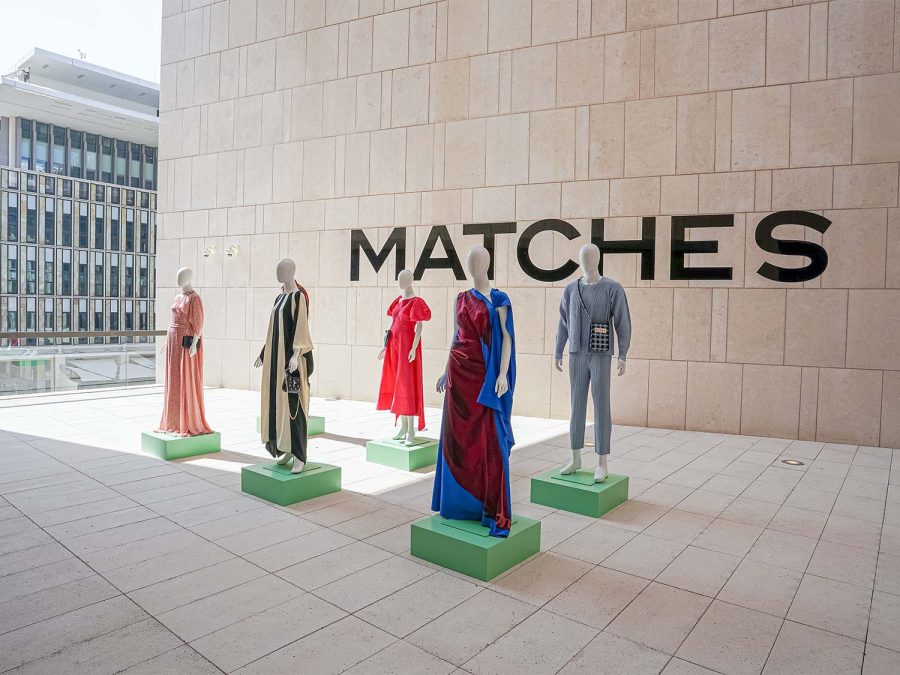
Once one of the most influential multi-brand luxury retailers in the world, Matches collapsed under the weight of e-commerce economics. Now, under new ownership, the brand is attempting a carefully engineered return.
A Luxury Retail Pioneer Is Reborn
Matches is back.
The British luxury fashion retailer, once a cornerstone of global designer discovery, is preparing for a return after a dramatic collapse that sent shockwaves through the fashion and retail industries. Under new ownership and armed with a redefined strategy, Matches is positioning itself not as a relic of the last e-commerce boom, but as a modern luxury platform built for today’s consumer.
This is not a simple relaunch. It is a resuscitation.
From Wimbledon Boutique to Global Tastemaker
Matches was founded in 1987 by husband-and-wife duo Tom and Ruth Chapman, who opened a single boutique in Wimbledon Village, London. From the beginning, the store distinguished itself through curation, blending established luxury designers with emerging talent and offering a highly personalized retail experience.
That curatorial instinct became Matches’ defining asset.
In the early 2000s, the company moved decisively into e-commerce, launching Matchesfashion.com and becoming one of the first luxury retailers to build a truly global online business. As online luxury shopping gained momentum in the 2010s, Matches expanded rapidly, shipping to dozens of countries and stocking hundreds of designers.
By the mid-2010s, Matches was no longer just a retailer – it was a cultural authority. Designers relied on it for discovery. Consumers trusted it for taste. That success attracted private equity. In 2017, Apax Partners acquired a majority stake in Matches at a reported valuation of around £800 million, setting the stage for aggressive growth.
The Economics That Undermined the Business
Despite its brand equity, Matches struggled with the same structural challenges that plagued luxury e-commerce peers.
The business was capital-intensive, margin-thin, and increasingly dependent on discounting and promotions to drive traffic. Rising digital marketing costs, complex global logistics, and a growing shift by luxury brands toward direct-to-consumer (DTC) sales further squeezed profitability.
By the early 2020s, growth slowed. Losses mounted.
In late 2023, Apax sold Matches to Frasers Group, the retail conglomerate owned by British billionaire Mike Ashley, for approximately £52 million – a fraction of its former valuation. The move was widely seen as a last attempt to stabilize the business.
It didn’t work. Within three months, Frasers Group concluded that Matches was making “material losses” and missing financial targets. In March 2024, the company entered administration, the UK equivalent of bankruptcy protection.
Administration and Industry Fallout
The collapse was swift and painful.
Hundreds of employees lost their jobs as Matches’ physical stores closed and online operations were wound down. Designers and suppliers were left with millions of pounds in unpaid invoices, sparking widespread anger across the fashion industry. Customers found themselves unable to process returns or refunds.
More broadly, Matches’ failure became emblematic of a deeper reckoning in luxury retail: the realization that scale alone does not guarantee sustainability in e-commerce.
For months, the Matches brand sat dormant – valuable, but damaged.
The IP Sale That Changed Everything
The turning point came in late 2025, when the intellectual property of Matches – including its brand name and in-house label Raey – was acquired by a newly formed luxury group called Hulcan.
Hulcan is led by Joe Wilkinson and Mario Maher, entrepreneurs best known for founding Mile, a members-only luxury shopping platform backed by LVMH Luxury Ventures. Crucially, Hulcan did not acquire Matches’ old operations or liabilities – only the brand IP.
That distinction matters. This is not a continuation of the failed business. It is a clean-slate rebuild using a globally recognized name.
A Different Strategy for a Different Era
The new owners have been explicit: Matches will not return as the same kind of company it once was.
Instead of a traditional multi-brand e-commerce marketplace, Hulcan envisions Matches as part of a broader luxury ecosystem, blending commerce, content, and community.
Key elements of the new strategy include:
1. Experience Over Volume
Rather than chasing endless inventory and scale, the revived Matches will focus on tight curation, storytelling, and high-engagement experiences. The goal is to increase lifetime value, not just transaction volume.
2. Integration With Mile
Matches will be strategically connected to Mile’s members-only platform, introducing gated access, exclusive drops, and community-driven engagement – a model increasingly favored by younger luxury consumers.
3. Protecting Brand Equity
Deep discounting, which damaged Matches’ positioning in its final years, will be avoided. The emphasis is on brand trust and cultural relevance, not clearance sales.
4. A Phased Relaunch
A full relaunch is expected in 2026, beginning digitally, with potential physical or experiential touchpoints to follow. Raey, Matches’ minimalist in-house label, is also expected to return under refreshed creative direction.
Rebuilding Trust With Designers and Consumers
Perhaps the biggest challenge facing the revived Matches is reputation.
Designers burned by unpaid invoices may be reluctant to re-engage. Consumers who lost refunds may be skeptical. Hulcan’s leadership has acknowledged this openly, signaling a long-term approach centered on financial transparency and partnership stability.
Industry observers note that the absence of legacy debt gives the new Matches a critical advantage – but rebuilding goodwill will take time.
Why Matches’ Return Matters
Matches’ comeback is about more than one brand.
It is a test case for whether legacy luxury retailers can be re-engineered for a post-boom digital economy. It raises broader questions about the future of multi-brand platforms in a world where luxury houses increasingly control their own channels. If Hulcan succeeds, Matches could emerge as a template for revival: smaller, smarter, more cultural than commercial.