
UK Retail Sales Slow Ahead of Black Friday
Retail sales in the UK fell by 1.1 % in October 2025 – the first drop since May. This week brought fresh evidence of consumer caution as UK retail sales unexpectedly declined, with clothing, footwear, and textiles among the hardest-hit categories. Shoppers appear to be holding back in anticipation of Black Friday offers, creating a softer trading environment for apparel retailers. This early pullback highlights the ongoing cost-of-living pressure and the growing preference for tactical, discount-driven shopping behaviour.
Why this matters: The dip signals weaker consumer confidence and suggests that even in the high-stakes holiday shopping season, retailers – especially in apparel/footwear sectors––face softness. For brands and retailers, it’s a reminder that discounting alone may not drive volume if consumers are waiting or holding back.
ASOS Leans on AI to Fight Declining Sales
ASOS made headlines with its renewed push toward technological innovation after reporting a 12% drop in annual sales. The retailer is rolling out advanced AI tools aimed at improving product discovery, personal styling recommendations, and garment visualisation. These enhancements reflect a broader shift in e-commerce, where AI is no longer experimental but foundational to customer experience, operational efficiency, and conversion optimisation.
Why this matters: This reflects two big trends: (1) fashion retailers need to move beyond discount-driven volume to higher value / improved margins, (2) the increasing role of AI in customer experience and personalisation in fashion retail. ASOS is positioning itself as both a style destination and a tech-driven retailer
Shein Continues to Disrupt the Mid-Market
Ultra-fast fashion giant Shein remains a dominant force, particularly across Europe, where its rapid micro-drop model continues to pressure mid-market players. Traditional brands are struggling to match Shein’s data-driven production cycles, agile supply chain, and aggressive price positioning. The widening gap reinforces Shein’s role as a structural disruptor reshaping how trends emerge and how consumers value clothing.
- The article points out that UK middle-market brands are being squeezed by Shein’s model.
Why this matters: The so-called “ultra-fast fashion” model is placing significant pressure on traditional mid-market brands that may not compete on speed, price or novelty in the same way. It also raises questions around sustainability, brand equity and margin erosion.
River Island Closes More Stores Amid Portfolio Restructure
River Island is continuing its restructuring by confirming another store closure (in Altrincham’s Stamford Quarter) by Jan 2026; up to 71 stores may face closure as part of adjusting its physical footprint. Sales dropped 19% and the retailer posted a £33.2 m annual loss.
Why this matters: Physical-store rationalisation is becoming more widespread in apparel retail. It signals that brands need to optimise their omni-channel presence, re-think store networks, and restructure real-estate cost bases to align with changed consumer behaviour.
Global Black Friday Spending Rises as Margins Tighten
Globally, Black Friday momentum is accelerating, with Australia alone projected to generate around $6.8bn in consumer spending. While this signals robust demand, it also highlights a challenge for retailers: deep discounting now feels mandatory for participation, tightening margins and creating a difficult balancing act between volume and profitability. Consumers are set to win on price, but retailers must strategise carefully to protect long-term value.
Online sales now make up ~22% of Black Friday totals (vs ~15% in 2019) in that region.
But heavy discounting to win traffic could strain margins.
Why this matters: It signals a major opportunity – but one with risks. Retailers need to balance volume with profit, manage stock/inventory carefully, and ensure they’re not just chasing transactions at the expense of sustainability.
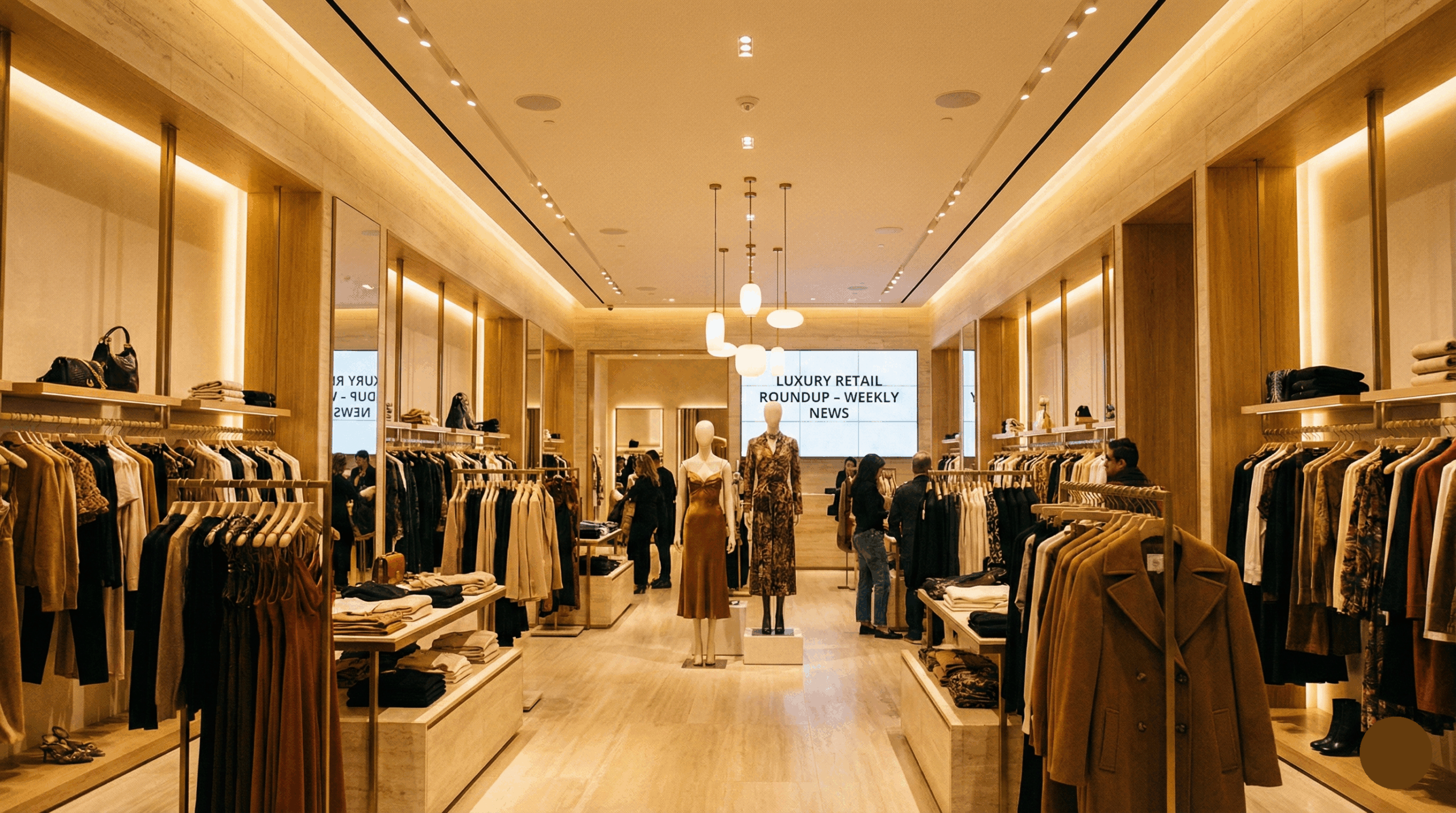
Luxury Retail Gains Confidence with New Store Growth
According to a recent report, luxury brands are doubling down on store expansion: retail space in the U.S. luxury segment rose about 65% in the first half of 2025, after prior contractions.
Why this matters: Even while mass-market apparel is facing margin pressure and discounting, the luxury end is signalling confidence by rebuilding or expanding physical footprint. For apparel retail broadly, this suggests a two-speed recovery: value/middle market remains under strain, premium/luxury sees selective
Key Takeaways for the Week
- Consumer hesitation is real: Retailers in apparel/footwear are feeling the pinch ahead of major shopping events.
- Tech & personalisation are becoming more critical: Brands like ASOS are leaning into AI to win back shoppers.
- Competitive dynamics are shifting: Ultra-fast fashion players like Shein are grabbing share and pressuring traditional players.
- Physical retail footprint is being re-examined: Aligning store networks with the new reality is essential.
- Bold bets in luxury contrast with strain in middle market: Brands may need to pick which segment they serve best.
- Big shopping events (Black Friday, holiday season) still matter, but margin control and inventory discipline are vital.


